
Hey friend,
Running (or about to start) a home daycare—go you! You’re stepping into a role that is so much more than just babysitting. You’re shaping young minds, fostering a love for learning, and providing a safe and loving space where children can thrive.
But let’s be real—setting up the perfect daycare environment takes more than just having a few toys and a snack station.
Parents want to know that their child is in a space that feels warm and homey, but also structured, safe, and educational. And you want a space that’s easy to manage, encourages positive behavior, and keeps kids engaged all day long.
That’s why today, I’m walking you through how to create a home daycare environment that is warm, safe, and stimulating—a place that kids love, parents trust, and YOU enjoy working in every day.
Let’s dive in!
Step 1: Make It Feel Like a “Home Away From Home”
💡 Why This Matters: Kids (and parents!) need to feel an emotional connection to your space. A daycare that feels too sterile or too chaotic can make little ones feel uneasy.
✅ How to Create a Cozy Atmosphere:
✔️ Soft, warm lighting – Avoid harsh fluorescent lights. Use soft lamps or string lights to make the space feel comforting.
✔️ Comfy spaces – Provide a cozy reading nook with pillows and blankets where kids can relax.
✔️ Family photos & personalized touches – Let kids bring a small blanket or stuffed animal from home to create familiarity.
✔️ Calm colors & natural elements – Studies show that warm tones and nature-inspired decor create a soothing environment.
📌 Pro Tip: Adding simple home-like touches, like a rug in the play area or curtains on the windows, makes the space feel welcoming instead of just another “classroom.”
Step 2: Safety First—Every Time
💡 Why This Matters: Parents’ #1 concern is safety. If they don’t feel like their child is in a safe space, they won’t enroll. And as a provider, you want to ensure that your daycare runs smoothly with minimal accidents.
✅ Essential Safety Checks:
✔️ Baby-proof everything – Cover outlets, secure heavy furniture, and use safety gates where needed.
✔️ Keep hazardous items locked away – Cleaning supplies, medicines, and small choking hazards should be out of reach.
✔️ Secure all exits – Doors leading outside should be child-proofed to prevent wandering.
✔️ Have a clear emergency plan – Post evacuation routes and emergency contacts in a visible place.
✔️ Daily safety sweep – Before kids arrive, do a quick check to ensure all hazards are addressed.
📌 Fact: According to the National Safety Council, most childhood injuries occur in familiar home environments. A little extra precaution goes a long way in preventing accidents.
Step 3: Organize for Success
💡 Why This Matters: A well-organized daycare is easier to manage and helps children learn responsibility.
✅ How to Set Up an Organized Space:
✔️ Separate play zones – Create designated areas for different activities (e.g., reading, building, pretend play, art).
✔️ Use labeled bins – Keep toys sorted by type and labeled with pictures so kids can help clean up.
✔️ Rotate toys regularly – Too many options at once can be overwhelming. Rotating toys every few weeks keeps things fresh.
✔️ Have a consistent daily routine – A predictable schedule reduces anxiety and helps kids feel secure.
📌 Pro Tip: Clear structure and organization create a sense of order and calm—for both kids and YOU!
Step 4: Stimulate Their Senses and Imagination
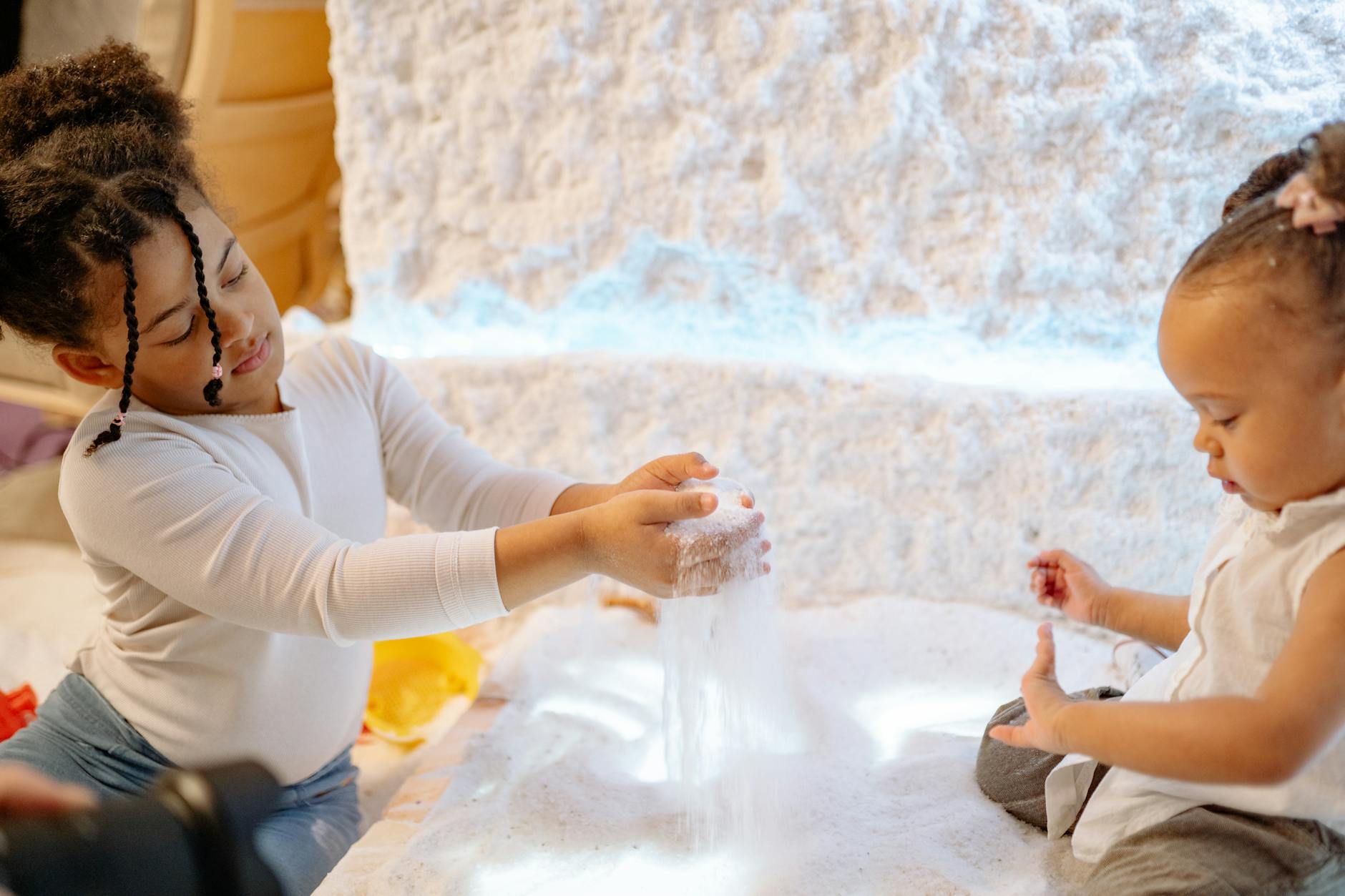
💡 Why This Matters: The first five years of life are the most critical for brain development. The more hands-on, sensory-rich experiences you provide, the stronger their cognitive and emotional growth.
✅ How to Create a Stimulating Environment:
✔️ Offer hands-on learning materials – Think sensory bins, textured fabrics, and real-world objects (like measuring cups for scooping and pouring).
✔️ Encourage pretend play – A small play kitchen, dress-up corner, or puppet theater boosts creativity and social skills.
✔️ Incorporate nature – Indoor plants, a small garden, or even nature walks outside spark curiosity and learning.
✔️ Use open-ended toys – Blocks, play dough, and art supplies allow children to create and problem-solve in their own way.
📌 Fact: Research shows that sensory play improves fine motor skills, social skills, and emotional regulation in young children.
Step 5: Create a Positive Behavior Environment

💡 Why This Matters: A well-structured environment prevents 90% of behavior issues before they even start.
✅ How to Encourage Positive Behavior:
✔️ Set clear expectations – Keep daycare rules simple (e.g., “Be kind,” “Use gentle hands,” “Take turns”).
✔️ Use visual cues – A picture-based schedule helps kids know what’s coming next.
✔️ Model good behavior – Kids copy what they see! Use kind words, patience, and gentle problem-solving techniques.
✔️ Give positive reinforcement – Praise good behavior (“I love how you helped your friend clean up!”).
✔️ Provide a calm-down area – A quiet corner with soft pillows where kids can go when they need a break.
📌 Pro Tip: Instead of saying “No running!”, try “Use walking feet.” Positive wording helps kids understand what TO do rather than just what NOT to do.
Step 6: Engage Parents in Your Daycare Environment
💡 Why This Matters: Parents feel more connected and reassured when they can see what’s happening in your daycare each day.
✅ How to Keep Parents in the Loop:
✔️ Send daily updates – A quick message or photo helps parents feel involved.
✔️ Host parent events – A “Family Storytime” or “Art Show & Tell” makes parents feel part of the daycare experience.
✔️ Create a family bulletin board – Post reminders, upcoming themes, and a few snapshots of the kids in action.
✔️ Ask for parent feedback – Parents appreciate when you value their input on activities and routines.
📌 Fact: 78% of parents say they feel more confident in their childcare choice when they receive regular updates.
Final Thoughts: You’re Creating Something Special!
Friend, when you create a warm, safe, and stimulating environment in your home daycare, you’re not just running a business—you’re building a space where little ones feel loved, grow confidently, and make lifelong memories.
Quick Recap:
✔️ Make it feel like home – Cozy, welcoming, and kid-friendly.
✔️ Prioritize safety – Childproof, secure exits, and have emergency plans.
✔️ Stay organized – Labeled bins, clear routines, and designated play zones.
✔️ Stimulate learning – Hands-on play, nature, and open-ended activities.
✔️ Encourage good behavior – Clear expectations, visual cues, and praise.
✔️ Engage parents – Keep them informed and involved.
When you set up your daycare with intention, you create a space that kids, parents, and YOU will absolutely love.
What’s Next? Let’s Get You Set Up for Success!
✅ Download My Free Home Daycare Setup Checklist (Coming Soon).
✅ Join My Facebook Group for Daycare Owners (Coming Soon).
Now go make your daycare space amazing—you’ve got this! 😊
Let’s Chat!
What’s your biggest challenge in setting up your daycare environment? Drop a comment—I’d love to help! 💬

 Explore & Educate
Leave a comment